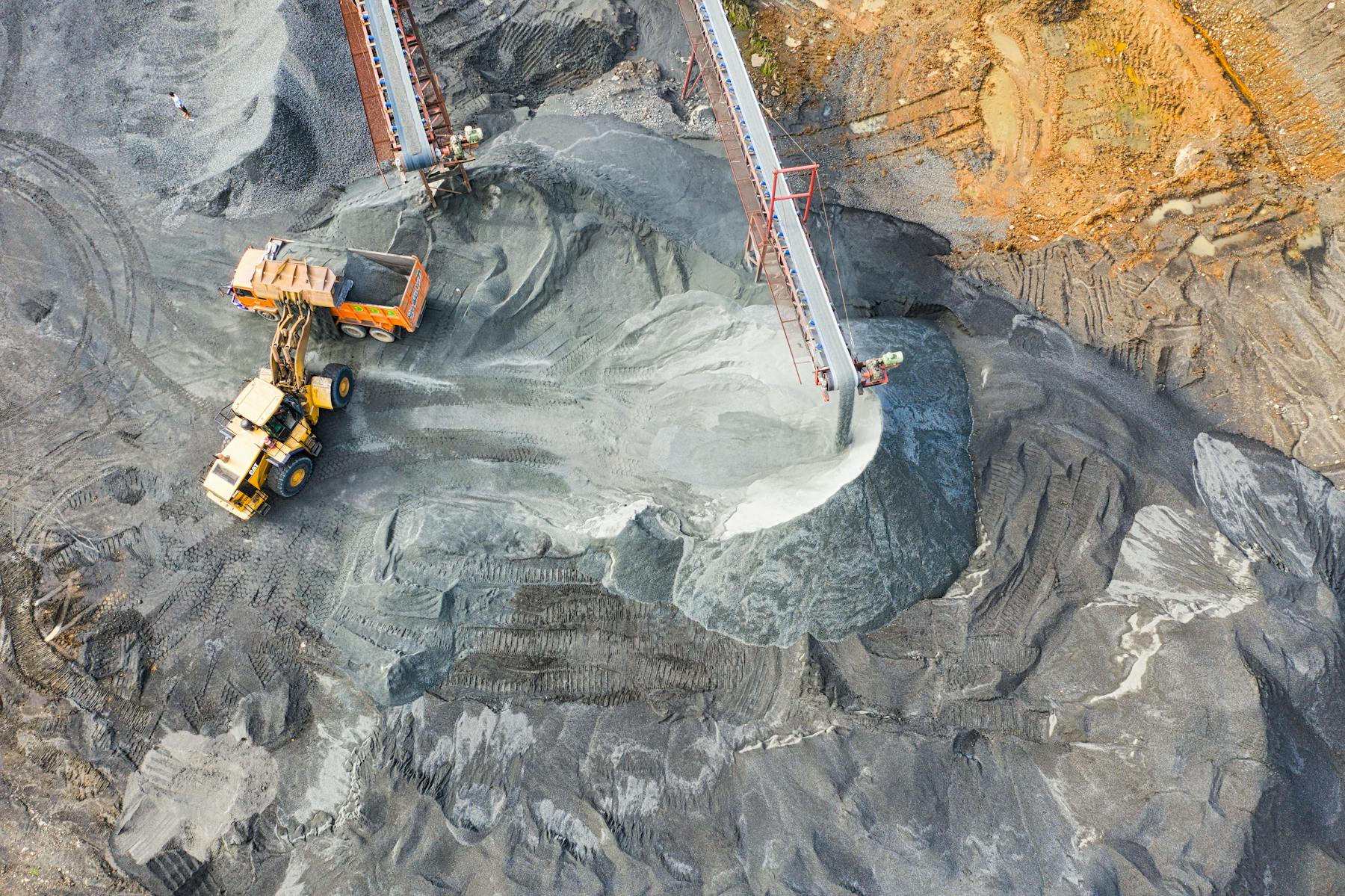
Centinela sits at 2,300m in the Antofagasta region of Chile — copper-mining country, dry, high-altitude, with the kind of operational predictability the Atacama enables. Antofagasta plc, the operator, is not Vale or Anglo American. It is solidly mid-tier — about USD 3.5B revenue, roughly the scale of South African major mining houses post-portfolio rationalisation.
They run 14 Komatsu 930E-5 autonomous haul trucks. The operation has been in production for 18 months. The stack is mature enough to study, immature enough to still surface real implementation lessons, and operating at a scale that translates directly to SA mid-tier mining.
The stack.
Komatsu FrontRunner — the autonomous haulage system — is the orchestration layer. It handles truck routing, dispatch, fleet-level coordination, and conflict resolution at intersections. The system supervises all 14 trucks plus the loading equipment they interact with. Centinela's operations team has access to system telemetry but does not directly drive truck behaviour.
Underneath that, each truck runs Komatsu's on-board perception stack: LiDAR + radar + GPS fusion, with redundant safety perimeters around every truck. The perception stack handles obstacle avoidance autonomously — the operations team sees what is happening but cannot override individual truck decisions in real-time. The redundancy is the safety model.
Above the haulage system, Antofagasta runs its own integration layer connecting FrontRunner to their mine planning software (Hexagon MinePlan), their geological model, their dispatch system, and their corporate ERP. This is the layer where vendor-neutrality starts to matter — the FrontRunner system speaks to the rest of the operation through Antofagasta-built APIs, not Komatsu-proprietary protocols.
The data architecture.
Each truck generates roughly 14GB of telemetry per shift. The data flows over a private 5G network deployed across the operation. Hot data lives at the site control room; everything older than 7 days replicates to a Snowflake instance in AWS Santiago. Antofagasta runs analytics on the cold data layer.
The interesting wrinkle: predictive maintenance models on the trucks themselves are trained on the warm tier — the most recent 30 days of fleet-wide data — not on the full 18-month archive. The operations director told me the warm-tier model performs 7-12% better on near-term failure prediction than full-archive models. The reason is operational drift: rock characteristics, equipment wear patterns, and weather change enough that older data starts to mislead.
The safety model.
Zero major safety incidents on the autonomous fleet over 18 months. This is the headline that sells the technology to ESG-conscious boards. The reality on the ground is more textured.
The autonomy boundaries are tight. Light vehicles operating in the autonomous zone carry RFID tags that haul trucks recognise. Workers in the autonomous zone wear high-visibility vests with embedded beacons. The zone is geofenced — areas where light vehicles or pedestrians might appear unexpectedly are excluded from autonomous operations entirely.
For African operations, the safety model translation requires care. Centinela has the advantage of strict zone discipline — the operation was designed for autonomous haulage from the ground up. SA mining operations retrofitting autonomy into brownfield pits will spend more on geofencing, more on RFID infrastructure, and more on workforce training before any haul truck moves autonomously.
The operations rhythm.
What surprised me most: the operations team is smaller than I expected. Eight controllers supervise the 14-truck fleet around the clock, three on each shift plus shift overlap. They are not driving — they are exception handlers. Most of their job is monitoring fleet KPIs, handling the 5-15% of situations the autonomous system escalates, and coordinating with maintenance.
The maintenance team is roughly the same size as a manual-fleet operation, but the work is different. More electronics, more sensors, more software updates. The mechanical workshop is quieter than I expected. The IT/OT team is bigger than I expected — six engineers maintaining the integration layer between FrontRunner, MinePlan, and the operations ERP. This is where the real talent gap shows up.
What this tells us about Anglo, Sibanye, Implats 2027-2030.
Three things, with confidence:
- Autonomous haulage will reach SA majors before 2030. The technology readiness, the cost trajectory, and the operational reference points (Centinela, Vale Brucutu, Suncor Fort Hills) all converge. Anglo American's VOXEL platform plus Microsoft Azure plus Siemens / Innomotics is the announced architecture; deployment timing is the open question.
- The IT/OT integration layer is the talent bottleneck. The technology stack is buyable; the integration engineers who make Komatsu speak to Hexagon and SAP are scarce. SA mining operations that build this capability in 2026-27 will deploy autonomy faster than peers who try to buy it later.
- Retrofitting is expensive. Centinela was designed for autonomy. Anglo Kolomela, Sibanye Marikana, Implats Bafokeng were not. The retrofit will cost 1.5-2.5× a greenfield deployment on the same fleet size, dominated by zone redesign, geofencing infrastructure, and workforce training.
For SA mid-tier mining considering the autonomy decision: start with the readiness audit scoped specifically for autonomy. The technology decision can wait 18 months; the readiness work (IT/OT integration capacity, zone discipline, data architecture) cannot.