
Partner · NVIDIA Inception
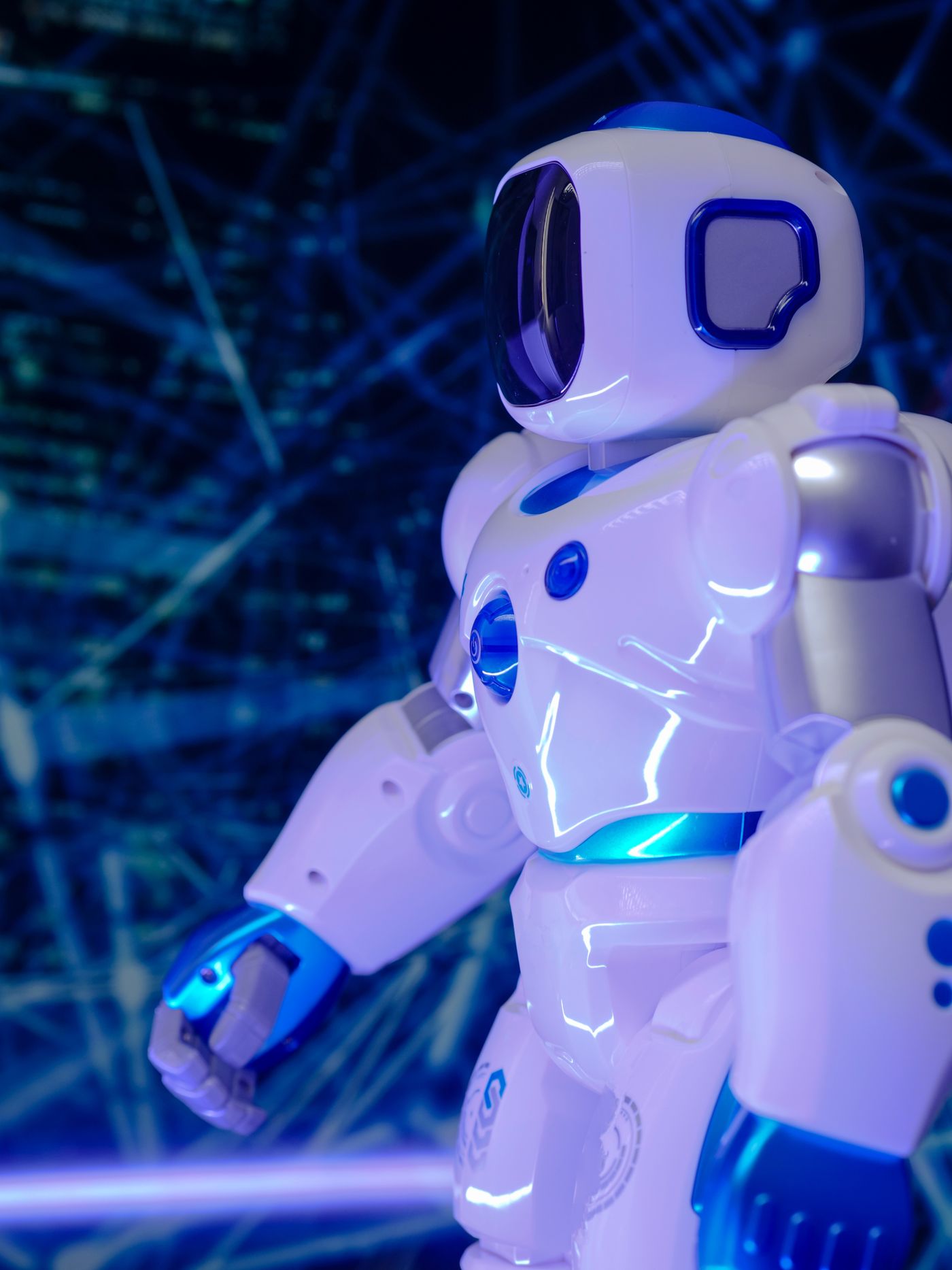
Embodied AI for dirty, dangerous, and dexterous tasks. Figure, Apptronik Apollo, 1X NEO, Agility Digit, Tesla Optimus, Unitree, Fourier GR-1 — vendor-neutral integration trained on NVIDIA GR00T and Isaac Sim. The category that will define industrial AI between 2026 and 2030. Calibrated for operations across South Africa, Nigeria, Kenya, Zambia, Ghana, India, Brazil, GCC, Australia, and Southeast Asia.
This platform page dates from our industrial-AI era. The robotics practice now has its own catalog with real ZAR prices, an evidence-ranked deployment tracker, and a 90-day supervised pilot offer.
Industrial humanoids are bipedal robots designed for tasks too dirty, dangerous, or dexterous for fixed automation. Unlike a robot arm bolted to a cell, a humanoid moves around your plant, picks up tools designed for human hands, navigates stairs and uneven floors, and can be retasked between operations without a new mechanical install.
The current commercial leaders ship to specific industrial domains: Figure 02 at BMW for chassis subassembly, Apptronik Apollo at Mercedes and GXO for warehouse case-handling, Agility Digit at Amazon for tote movement, 1X NEO for general-purpose dexterous tasks, Tesla Optimus internally at Tesla, Unitree and Fourier GR-1 at China-tier automotive and electronics manufacturers.
For mid-market industry: this is the freshest 2026 category, and the only one where the integrator layer has not yet been claimed. Foundry Cortex's position is to be the vendor-neutral integrator — selecting the right humanoid for the right task, trained on NVIDIA GR00T foundation models in Isaac Sim, integrated with the operation's existing safety systems and maintenance protocols.
Three things changed between 2024 and 2026 that moved humanoids from speculative to deployable:
The 18-month window matters: mid-market industrial operations that deploy humanoids on dirty, dangerous, dexterous task niches in 2026/2027 carry no procurement risk and capture productivity gains before competitors. After mid-2028, humanoid deployment is standard equipment expectation, not competitive advantage.
Mining inspection in narrow underground passages. Foundry tool handling at high temperatures. Cold-chain warehouse picking with variable SKU mixes. Plant security and patrol. Packaging line replenishment where SKUs change weekly. Anywhere the task is repetitive enough to automate but variable enough that fixed automation breaks every product changeover.
Score candidate tasks across dirty/dangerous/dexterous dimensions plus variation, SKU change frequency, and safety classification. Eliminate tasks where fixed automation is strictly better.
Match task profile to vendor strengths: Figure for assembly, Apptronik for warehouse, Digit for tote movement, NEO for dexterous, Optimus for ranges where Tesla economics win.
Build digital twin of the task environment in NVIDIA Isaac Sim. Fine-tune GR00T on simulated demonstrations. Validate sim-to-real transfer with bounded physical trials.
Stage with full safety perimeter, OSHA-equivalent compliance, and operator training. 4-week shadow followed by autonomous operation with telemetry-driven exception handling.
Foundry Cortex is opinionated about technology selection. We use the model classes below in production, chosen for accuracy, deployment simplicity, and proven performance on African industrial datasets.
The world model for humanoid behaviour. Pretrained on millions of hours of demonstration data. Fine-tunes to new tasks in hours rather than months. The 2025 inflection technology.
High-fidelity robotics simulation in Omniverse. Where humanoids train on your specific task environment before any physical deployment. Sim-to-real transfer is now production-grade.
Each humanoid vendor ships its own perception/safety stack. Foundry Cortex layers facility-specific safety policies (named exclusion zones, human proximity rules) on top of vendor defaults.
Humanoids do not run in isolation. They receive task assignments from the agentic operations layer, report completion to CMMS, escalate exceptions through the same telemetry as software agents.
Configured differently for each industrial vertical — the asset classes differ, the regulatory frameworks differ, the partner stack differs. Foundry Cortex maintains a vertical-specific playbook for each.
Foundry Cortex is vendor-neutral on the data and platform layer. We deploy on the best-fit infrastructure for your operation — and hold channel partner status with every major industrial AI platform in our stack.
Live at BMW for chassis subassembly. Best fit for high-precision repetitive tasks on assembly lines. Strong dexterity, mid-range mobility.
Live at Mercedes and GXO. Best fit for case-handling, tote movement, light material handling. Strong payload, OSHA-compliance built into the design.
General-purpose humanoid with strong dexterity. Best fit for tasks requiring variable hand manipulation. The closest current commercial humanoid to a household-grade form factor.
List prices range from ~$30k (Tesla Optimus target at scale) to $200k+ (Figure 02 enterprise units). Operating cost — power, maintenance, software — adds $20–40/hour depending on duty cycle. The decision economics versus human labour are favourable in markets above ~$20/hour fully loaded; in lower-wage markets the decision economics favour danger or scarcity tasks (mining inspection, hazardous-zone work) rather than general labour replacement.
Yes, narrowly: parts logistics at BMW Spartanburg (Figure 03), UBTech Walker S2 fleets in Chinese factories, and Agility Digit's paid warehouse work. Everything else is pilots and press releases — see our deployment tracker for the evidence-ranked list.
Yes, with appropriate perimeter design. Modern humanoids (Figure 02, Apollo, Digit) ship with multi-modal perception, collision avoidance, and force-limited actuators. Production deployments use defined collaboration zones rather than full segregation. Foundry Cortex deployments layer site-specific safety policies on top of vendor defaults, and pair every humanoid with named human supervisors during the first 6 months.
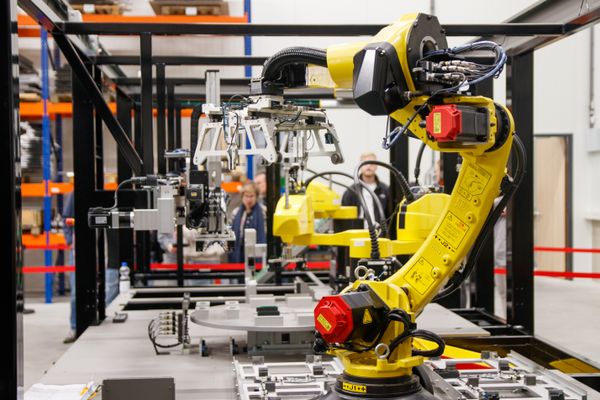
Fixed robot arms beat humanoids on repetitive precision tasks in a controlled cell. AGVs beat humanoids on straight-line material transport. Humanoids win where the task requires (a) operating in environments designed for humans without retrofitting, (b) handling variation that breaks fixed automation, or (c) navigating terrain unsuitable for wheeled robots. Mining underground passages, cold-storage with weekly SKU rotation, assembly with mixed-model production lines all fit this profile.
Now, for inspection and dangerous-zone work; second half of 2026 for warehouse picking and packaging replenishment; 2027 for assembly. The Foundry Cortex Readiness Audit includes a humanoid suitability scorecard covering task types, safety profile, ROI bands, and vendor selection — that scorecard is the right starting point regardless of deployment timing.
The Foundry Cortex Readiness Audit quantifies downtime cost by asset class, scores data infrastructure, and delivers a board-ready ROI model in 14 days.