
Field report · Dongguan
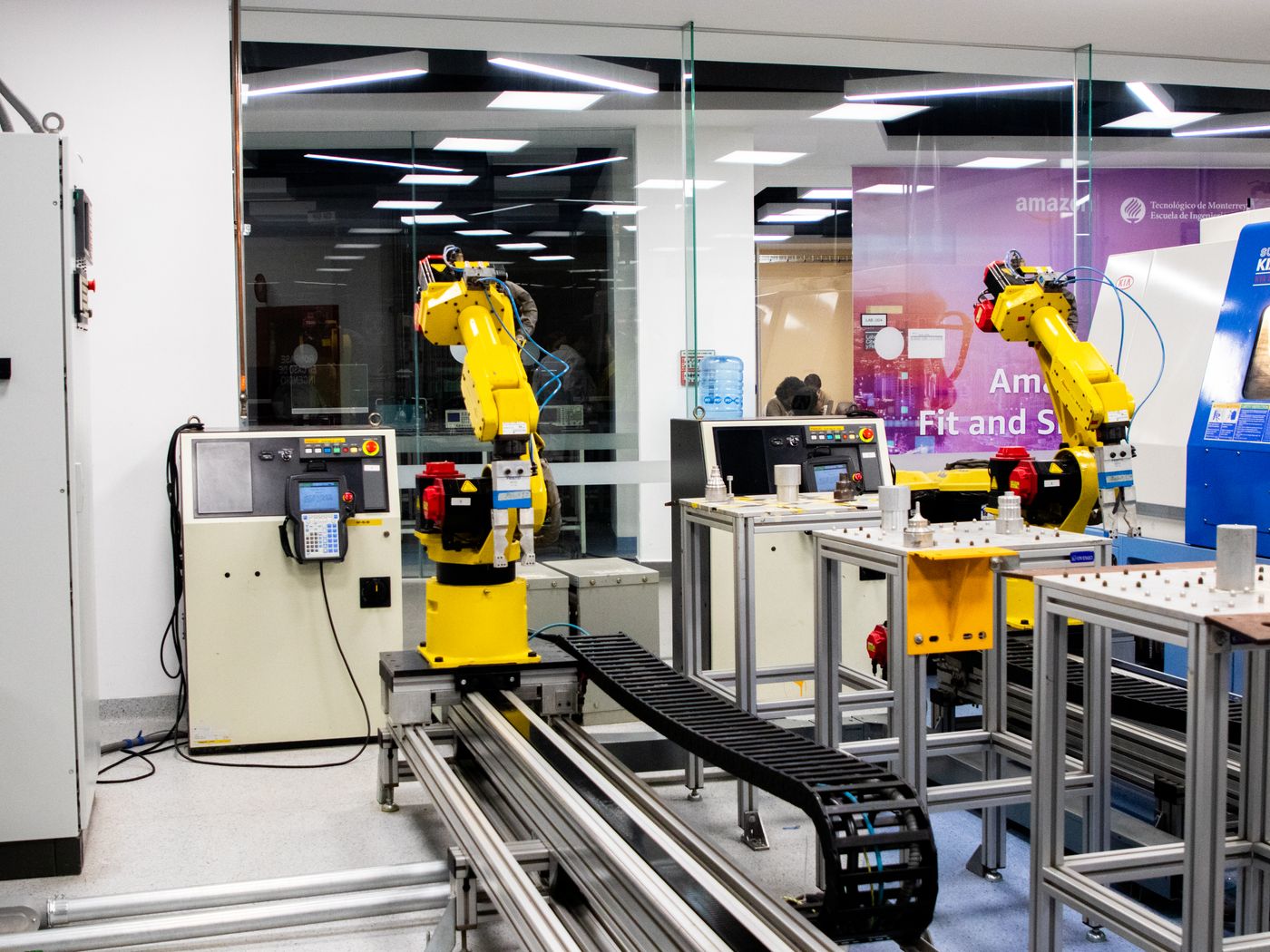
Autonomous AI agents that generate work orders, dispatch technicians, order spares, and brief executives — escalating to humans only on exceptions. LangGraph on Claude and GPT-4, deployed across mid-market mining, manufacturing, and process industries across South Africa, Nigeria, Kenya, Zambia, Ghana, India, Brazil, GCC, Australia, and Southeast Asia.
Agentic operations moves the industrial control loop from human-in-the-middle to human-on-the-edge. Predictive models forecast that a pump will fail. A digital twin confirms the failure mode and the optimal intervention window. Then an agent — not a person — generates the work order, books the technician, orders the part, briefs the operations director, and only escalates if something novel happens.
Until 2025, this was theoretical for mid-market industrial. The catalysts were LangGraph (which won the agent framework war with 34% citation share among large enterprises in Q1 2026), SymphonyAI IRIS Flows (300+ pre-built industrial agents), and Claude + GPT-4-class models finally crossing the reliability threshold for sustained multi-step industrial tasks.
Foundry Cortex deploys agents as the top layer of the unified industrial brain. The predictive and twin layers feed signals; agents act on them. The platform decision is opinionated: LangGraph orchestration on Claude Sonnet 4.6 for reasoning, GPT-4 class for tool-use heavy workflows, OpenTelemetry for traces.
Agentic does not mean unsupervised. Foundry Cortex deployments carry three explicit human-loop checkpoints: capex authorisation (any agent decision above a configurable rand threshold escalates), safety-critical assets (named asset classes are human-only), and novel failure modes (when the agent encounters a pattern outside its training distribution, escalate immediately).
The result is not full autonomy. It is autonomous handling of the 70–85% of routine industrial decisions that historically consumed your maintenance team's time — and human attention concentrated on the 15–30% that genuinely needs judgment.
Catalogue every action agents will need to take: CMMS write, ERP order, technician dispatch, executive notification. Build sandboxed equivalents for development and staging.
For each routine operation, design the agent graph: triggers, decision points, tool calls, escalation rules. Capture human-loop checkpoints explicitly.
Run agents in shadow for 4–8 weeks. Agent generates the action; human approves before execution. Catalogue every deviation. Tune prompts and graph until shadow accuracy clears 95%.
Cutover to autonomous execution within configured thresholds. OpenTelemetry traces every decision. Weekly review of escalations and false-positives. Continuous retraining.
Foundry Cortex is opinionated about technology selection. We use the model classes below in production, chosen for accuracy, deployment simplicity, and proven performance on African industrial datasets.
The 2025/2026 enterprise standard. Graph-based agent state machines with built-in checkpointing, human-loop, and observability. 34% citation share at large enterprises (Gartner Q1 2026).
For multi-step industrial reasoning, planning, and exception handling. Best price-performance for sustained agent workloads at production scale.
For tool-heavy workflows where parallel function calling and structured outputs dominate. Frequently paired with Claude for the planning layer.
300+ industrial agents shipped pre-configured. Best fit when speed-to-value matters more than custom workflow design.
Configured differently for each industrial vertical — the asset classes differ, the regulatory frameworks differ, the partner stack differs. Foundry Cortex maintains a vertical-specific playbook for each.
Foundry Cortex is vendor-neutral on the data and platform layer. We deploy on the best-fit infrastructure for your operation — and hold channel partner status with every major industrial AI platform in our stack.
The framework standard. Foundry Cortex deploys all production agents on LangGraph with LangSmith for observability.
300+ industrial agents. Best fit when the operation needs production agents in 8–12 weeks rather than custom design.
Foundry Cortex is an Anthropic-aligned deployment partner. Claude Sonnet 4.6 powers the planning layer; Claude Opus 4.7 handles complex exception triage.
RPA executes predefined deterministic scripts. If anything changes, the script breaks. Agentic operations uses reasoning models that handle variation. An RPA bot can write a work order in your CMMS; an agent can decide whether to write the work order in the first place, what priority, what parts to order, and when to escalate.
Both, layered. Claude Sonnet for planning and exception handling (better sustained reasoning). GPT-4 class for tool-heavy workflows (better parallel function calling). Foundry Cortex production deployments typically run both with a router that selects per workflow.
Three safeguards: (1) configurable capex threshold above which all decisions escalate, (2) named safety-critical asset classes that are human-only, (3) OpenTelemetry trace on every decision so wrong calls are reviewable. In shadow mode (Phase 3) you set the autonomy thresholds before any production action.
No. It shifts what the team does. Before: queue-of-tasks management consumed 60–80% of their time. After: exception handling, novel failure analysis, capex prioritisation. Operations teams typically grow capacity rather than shrink — the autonomous handling of routine work creates room for proactive operations work that was previously starved.
The shadow mode in Phase 3 is the trust-building mechanism. 4–8 weeks of agent-proposes / human-approves with deviation logging is sufficient for most teams to ship autonomous workflows on routine work. Exception-handling autonomy takes longer — typically 4–6 months of telemetry before the team is comfortable.

The Foundry Cortex Readiness Audit quantifies downtime cost by asset class, scores data infrastructure, and delivers a board-ready ROI model in 14 days.