
Field report · Centinela
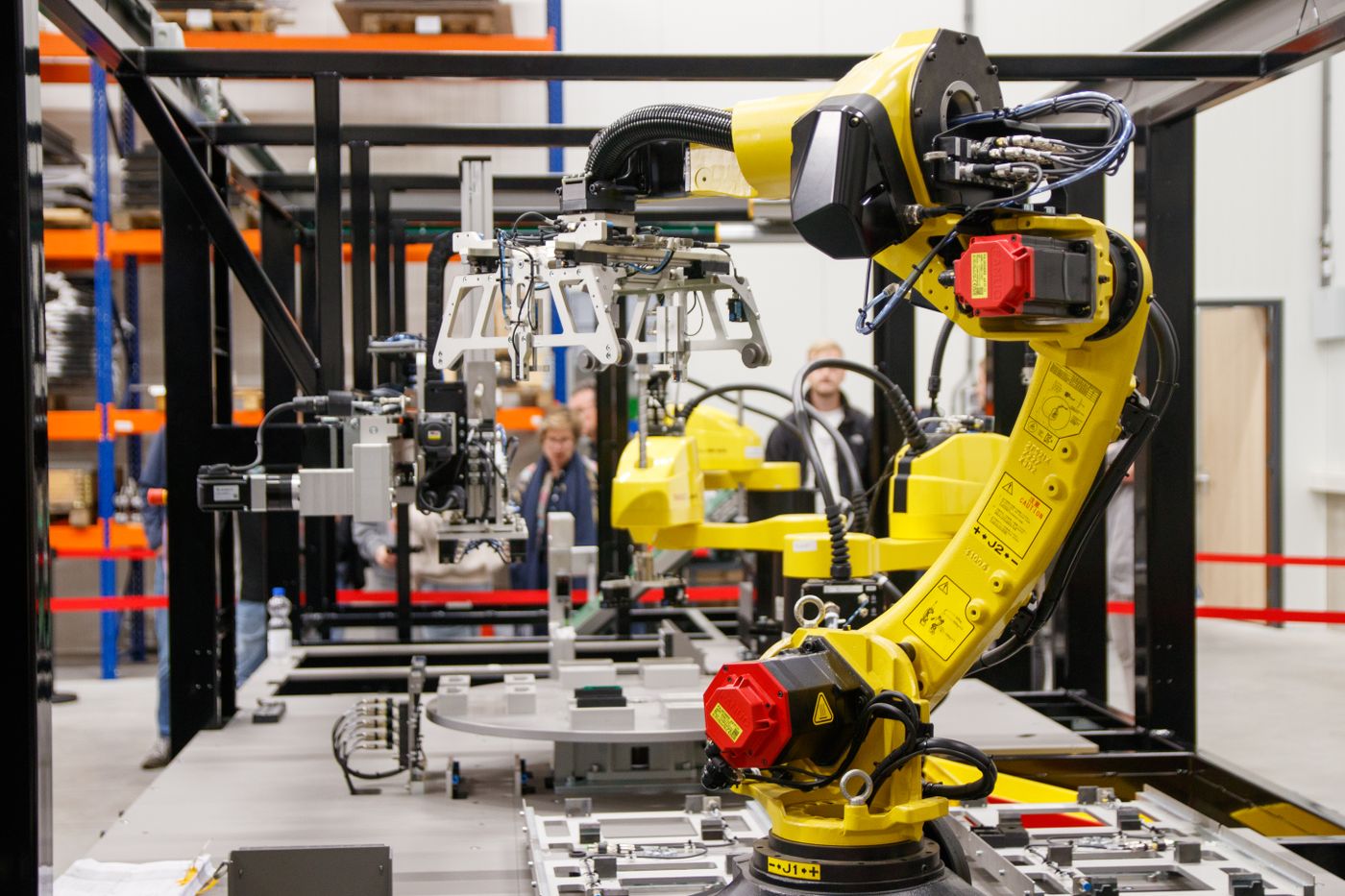
Physics-accurate live simulation of your line, plant, or shaft. NVIDIA Cosmos and Omniverse industrial physical AI. Run a thousand operational scenarios before committing capex once. Calibrated for operations across South Africa, Nigeria, Kenya, Zambia, Ghana, India, Brazil, GCC, Australia, and Southeast Asia.
An industrial digital twin is a live, physics-accurate, sensor-fed simulation of a physical operation — a plant, a mill, a process line, a shaft. It mirrors the real-world state in near real-time and lets operators run counterfactual scenarios: what if we increase throughput 15%? What if this bearing fails on Tuesday? What if we re-sequence the kiln feed? — without touching production.
What changed between 2024 and 2026: NVIDIA Cosmos released generative world-model foundations trained on industrial physics, and Omniverse matured into an enterprise platform with USD interop, RTX rendering, and PhysX simulation. Together they move digital twins from bespoke 9-month builds to 6-week productionisations.
Foundry Cortex deploys digital twins as one layer of the unified industrial brain. The twin consumes the same sensor data feeding the predictive maintenance models — but where predictive maintenance forecasts what will fail, the twin answers what to do about it.
NVIDIA ships two distinct industrial AI platforms that often get confused. Cosmos is a foundation model for physical world prediction — pretrained on 20M+ hours of robot and industrial video. You query it with a current state and it generates physically plausible future frames. Omniverse is a 3D collaboration and simulation runtime — it renders, simulates physics, and connects CAD/PLM/IIoT data into a single virtual environment.
For most mid-market deployments, Foundry Cortex uses Omniverse as the runtime (because it integrates with existing AVEVA PI, Bentley, and Autodesk assets) with Cosmos models embedded for the predictive layer. Pure Cosmos deployments fit research-tier operations; pure Unity twins fit where the operation already has Unity asset pipelines from training or simulation work.
Ingest your CAD models (AutoCAD, SolidWorks, Bentley), point-cloud scans where CAD is missing, and live sensor feeds. Reconcile geometry with sensor placement.
Run PhysX-backed simulation parameter calibration against historical operational data. Tune mass flow, thermal, kinematic models until twin output matches real plant within 3–5% error band.
Bidirectional bridge between the twin and your historian. Twin state updates every 5–60 seconds depending on asset criticality. Sub-second sync for safety-critical assets only.
Build operational scenarios that matter: throughput optimisation, energy reduction, safety incidents, planned shutdown sequencing, capex evaluation. Operators run them on demand.
Foundry Cortex is opinionated about technology selection. We use the model classes below in production, chosen for accuracy, deployment simplicity, and proven performance on African industrial datasets.
Generative physical AI trained on industrial video and robot data. Predicts plausible future states from current sensor + visual input. The 2025 inflection technology for twin simulation.
Enterprise-grade OpenUSD platform. Integrates CAD, IIoT, video, and engineering data into a single collaboration environment. PhysX physics, RTX rendering.
Best fit for infrastructure operations (cement, water, energy transmission). Strong civil + structural fidelity. Pairs well with AVEVA PI for operational data overlay.
When the operation already has Unity asset pipelines or needs operator training simulators. Lower physics fidelity than Omniverse but faster to iterate on UX.
Configured differently for each industrial vertical — the asset classes differ, the regulatory frameworks differ, the partner stack differs. Foundry Cortex maintains a vertical-specific playbook for each.
Foundry Cortex is vendor-neutral on the data and platform layer. We deploy on the best-fit infrastructure for your operation — and hold channel partner status with every major industrial AI platform in our stack.
The 2026 industrial physical AI standard. Foundry Cortex is a NVIDIA Inception partner with deployment templates for mining, manufacturing, and energy.
For civil-heavy operations. Cement, water, transmission. Best paired with AVEVA PI for live operational overlay.
For training simulators and operator UX. Lower physics fidelity, faster iteration. Best when the team already has Unity asset pipelines.
Foundry Cortex calibrates twins to within 3–5% error band on the operational metrics that matter (mass flow, throughput, energy consumption, equipment health). Achieving sub-3% is possible but rarely worth the calibration effort — most decisions don't change between 3% and 1% precision.
Yes. Cosmos requires NVIDIA GPUs, but Omniverse can render on commodity hardware (lower fidelity) and the simulation layer runs in the cloud. For mid-market deployments we typically pair an Azure VM with NVIDIA L40 or A100 GPUs — your operation does not need on-prem GPU infrastructure.
Rarely. Foundry Cortex ingests existing AutoCAD, SolidWorks, Revit, and Bentley models directly. Where models are missing or out of date, we run point-cloud scans (a 2-day operation for most plants) and reconcile geometry. Full re-modeling is a last resort.
A SCADA dashboard shows current state. A digital twin shows current state PLUS future state under hypothetical scenarios. SCADA tells you the pump is running at 85%; the twin tells you what happens to throughput, energy, and downstream queue if you push it to 95% — without actually pushing it.
Scoped at the readiness audit. As a directional band: a single mill or process line twin is 6–10 weeks of build effort plus platform licensing. A plant-wide twin is 12–20 weeks. Operations with mature CAD + sensor estates land at the low end of these ranges.

The Foundry Cortex Readiness Audit quantifies downtime cost by asset class, scores data infrastructure, and delivers a board-ready ROI model in 14 days.