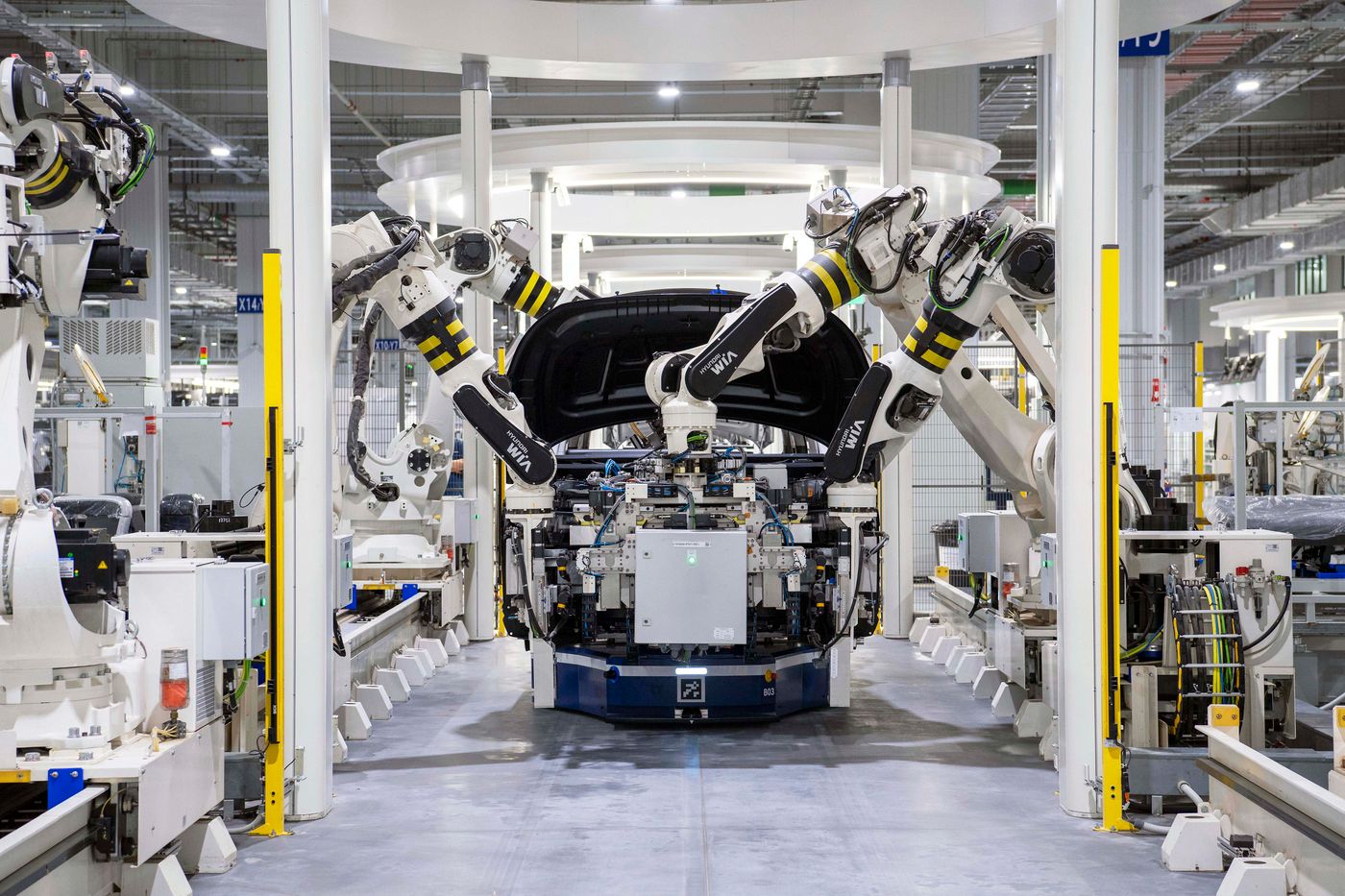
The operating system for
mid-market industrial operations.
The Industrial OS is the unified operating system for the four layers of modern industrial AI — predictive maintenance, digital twin, agentic operations, and industrial humanoids — deployed as one platform, contracted under one agreement, governed by one data backbone. Built for the mid-market the global vendors underserve.
Why “Industrial OS” is the right frame.
The mid-market industrial AI lane has, until 2026, been served piecewise. A historian vendor (AVEVA). A data-fusion vendor (Cognite). An agentic-workflow vendor (SymphonyAI). A foundation-model vendor (NVIDIA). A cloud vendor (Azure or AWS). Each strong in their layer, each demanding its own contract, its own integration scope, its own renewal cycle. The integration burden lands on the operation.
The Industrial OS is the integration model that replaces piecewise vendor coordination with a single operating system. One data backbone across the four capability layers. One identity plane. One agentic runtime. One human-loop console. One contract, one local-currency invoice, one SLA. The mid-market operation gets the integrated capabilities at the buyer-interface level; the underlying vendor stack is selected, integrated, and operated by Foundry Cortex.
The category is forming now. By late 2027, analyst coverage (Verdantix, IDC, IoT Analytics) will be reaching for a unifying frame as the piecewise vendors merge, consolidate, or get absorbed by the hyperscalers. The Industrial OS is the frame that explains what the category actually is — a single operating system for the industrial operations the giants underserve.
One operating system. Four capability layers.
Predictive forecasts. Twin simulates. Agentic acts. Humanoids execute. The four layers are composed into one runtime by the Industrial OS — not stitched together by your engineering team.
Predictive Maintenance AI
Industrial machine learning on historian, SCADA, and IIoT sensor data. Forecasts equipment failures days ahead. The dataset that informs every other layer.
Industrial Digital Twin
Physics-accurate live simulation of the asset estate. NVIDIA Cosmos + Omniverse physical-AI stack. Where scenarios run before capex commits.
Agentic Operations
Autonomous AI agents acting on the predictions and simulations. Generate work orders, dispatch technicians, brief executives — escalating only on exceptions.
Industrial Humanoids
Embodied AI for the dirty, dangerous, dexterous tasks. GR00T-trained Figure, Apptronik, 1X, Optimus — vendor-neutral integration into the operating system.
The Industrial OS replaces vendor coordination, not vendors.
Each piecewise vendor occupies a layer of the Industrial OS. Foundry Cortex selects, contracts, integrates, and operates them as one unified runtime — so the operation gets the capability without inheriting the integration burden.
Cognite
Industrial knowledge graph and data fusion
One layer of the Industrial OS data backbone. Mid-tier extension where the operation runs $30M+ revenue and needs multi-vendor sensor reconciliation.
AVEVA
PI System historian + Predictive Analytics + Production Twin
The historian layer of the Industrial OS data backbone where PI is already deployed. Foundry Cortex deploys above it.
SymphonyAI
IRIS Flows — 300+ pre-built industrial agents
The agentic operations layer where pre-built speed beats custom-built sovereignty. Integrates into the Industrial OS agentic plane.
NVIDIA
Cosmos + Omniverse + GR00T foundation models
The physical-AI foundation layer for digital twin and humanoid robotics. NVIDIA Inception strategic relationship.
The three-layer content arc.
Today (2026): Foundry Cortex sells Industrial AI for the markets the giants underserve. The category buyers search for is industrial AI, predictive maintenance, digital twin. The Industrial OS lives as a pillar concept on this page — the product reality already deploys as one platform; the vocabulary catches up over the next 18 months.
Bridge (Q2–Q4 2027): Industrial OS rises to co-equal positioning. Analyst coverage from Verdantix, IDC, and IoT Analytics begins to reach for a unifying frame as the piecewise vendors consolidate. Foundry Cortex content surfaces the term across platform pages, briefings, and case studies.
Master frame (late 2027 onward): The Industrial OS becomes the dominant category vocabulary. Foundry Cortex sits as the named integrator inside the category it helped define. The acquisition window — when the global vendors look for emerging-market ingress — opens by 2030.
See how the Industrial OS fits your operation.
The Foundry Cortex Readiness Audit quantifies which Industrial OS layers should land first at your operation, in what sequence, against what ROI — delivered in 14 days.