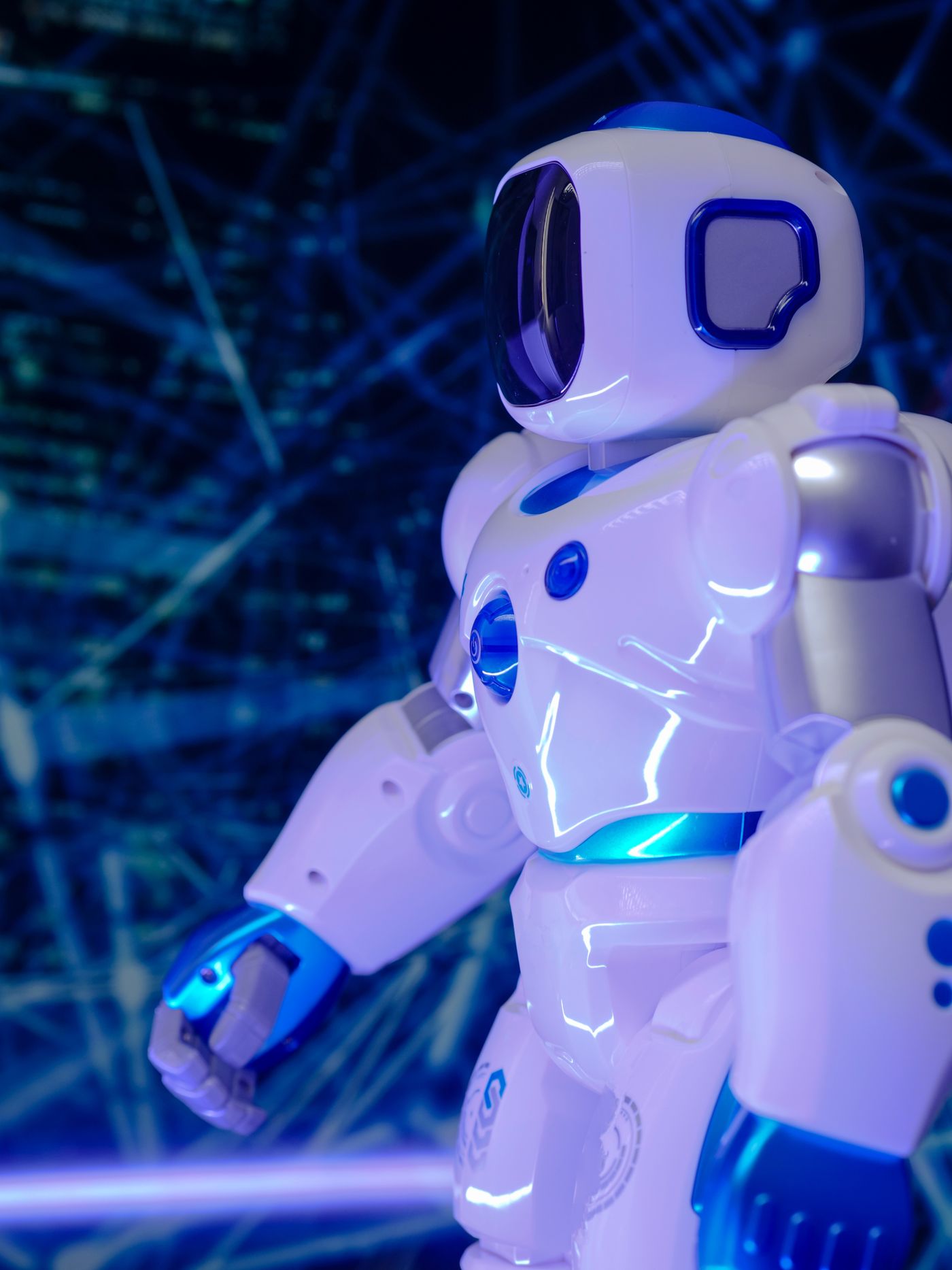
NVIDIA + Foundry Cortex — Cosmos, Omniverse, GR00T for the mid-market the giants underserve.
The 2025/26 inflection in industrial AI is led by NVIDIA's three-layer stack: Cosmos for physical world prediction, Omniverse for digital twins, GR00T for humanoid robotics. Foundry Cortex is a NVIDIA Inception partner deploying all three for African operations.
Why we partner with NVIDIA.
- 1
Cosmos is the foundation model for physical AI — pretrained on 20M+ hours of industrial and robot video. The 2024-2026 trajectory has been steep: it is now the most mature world model for industrial scenario prediction.
- 2
Omniverse is the 3D collaboration and simulation platform that ties it all together. OpenUSD, RTX rendering, PhysX physics, with mature integration to AVEVA, Bentley, Autodesk, and the major CAD/PLM systems.
- 3
GR00T is the humanoid robot foundation model that closes the loop. Pretrained on millions of hours of human-demonstration data. Generalises to new tasks with hours of fine-tuning rather than months.
- 4
NVIDIA Inception partnership gives Foundry Cortex early access to Cosmos and GR00T release tracks, joint engineering on African deployment patterns, and visibility into the 2027-2028 product roadmap that informs our client recommendations today.
Where we deploy it.
Cosmos-backed physics prediction layered onto Omniverse runtime. Mining, manufacturing, energy operations.
GR00T-trained Figure, Apptronik Apollo, 1X NEO deployments in Isaac Sim before any physical install. Mining inspection, manufacturing assembly, cold-chain picking.
Cross-cutting Cosmos workflows for safety scenario prediction, capex evaluation, operational what-if simulation.
The three layers, deployed together.
Most African industrial operations evaluating NVIDIA for the first time treat Cosmos, Omniverse, and GR00T as separate products. They are not. They are layers of one stack, designed to compose. Cosmos predicts physical futures. Omniverse runs the 3D simulation those predictions inform. GR00T trains the humanoid robots that act on the decisions the operations team makes from simulation output.
Foundry Cortex deployments typically activate one layer first, prove value, then expand. For most clients, the right entry point is Omniverse + Cosmos for a single mill or line digital twin. GR00T + humanoid robot deployment follows in Phase 3 or later, after the twin is mature enough to support sim-to-real transfer.
When NVIDIA Inception fits.
NVIDIA stack fits operations with: (a) physics-heavy operational questions where simulation beats historical data analysis, (b) appetite for humanoid robotics deployment in the 18-36 month horizon, (c) cloud GPU compute access (Azure or AWS region with adequate H100/L40 capacity), (d) capex budget for the foundation model usage costs (~R250-450k annual for mid-tier deployments).
Where NVIDIA stack fits less well: operations focused on predictive maintenance only (AVEVA or Cognite + open-source models are typically cheaper), operations without cloud GPU access (the foundation models are compute-heavy), operations skeptical of GR00T-class humanoid timelines (in which case Omniverse + Cosmos still work standalone).

Should you deploy on NVIDIA?
The audit answers that question against your specific operation — data maturity, vendor stack fit, total cost of ownership, integration economics.
Run the readiness audit →