The operation processes vegetables — sweet potato cubes, cabbage shreds, mixed-vegetable retail packs — for export. About R140M in revenue at exchange rates, supplying a Japanese retail chain. Two production lines, each running ~16 hours a day on a 24-hour cycle. They have hit a lights-out posture on one line and run 70% lights-out on the second.
Two years ago neither line was lights-out. Two years ago they had 28 line operators across the two lines. Today they have 9. They have not laid anyone off — attrition handled it — but the new hires are different. More electronics, more software, more quality lab work, fewer hands on product.
The capex sequence.
The plant manager walked me through what they spent and when, in order. I have converted to ZAR at long-run average rates and rounded to round numbers for clarity.
Year 1, Q1 — vision inspection (R1.4M)
They started with the easiest, highest-ROI move: vision-AI inspection at the packing station. Two industrial cameras per line, an Anomalib-class anomaly model trained on six weeks of labelled product images. The output: rejection of out-of-spec product before it reached packaging. Year-one savings: ~R3.8M in reduced rework + recall risk + customer chargebacks. Payback ~5 months.
Year 1, Q2-Q3 — robotic pack stations (R6.2M)
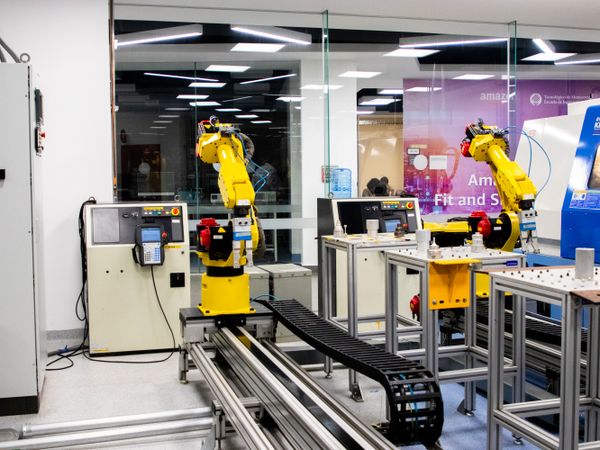
Six robotic pick-and-place units replaced four packing operators per line per shift. Standard ABB IRB delta robots with vision guidance from the inspection layer already in place. The cost was material but the inputs were modest — the vision system was already trained, the layout already designed for sanitation. The robots installed in 9 weeks per line.
Year 1, Q4 — historian + sensor estate (R2.1M)
They had been operating without a real historian, using Excel + the line PLCs. The Q4 investment was a Wonderware historian + ~40 new sensors (temperature, pressure, flow, vibration) on critical equipment. This was the unglamorous build that made everything later possible. Three months from purchase order to production data flowing.
Year 2, Q1 — predictive maintenance (R3.4M)
With the historian online and three months of data archived, they built XGBoost models on the top 18 critical assets — compressors, blanchers, cutters, conveyors, refrigeration units. Five-day forward horizon. Year-one downtime recovery: R8.2M against the R3.4M spend. Payback ~5 months again.
Year 2, Q2 — agentic operations (R2.8M)
The big one for lights-out posture. They built a LangGraph-orchestrated agent layer on top of the predictive models that auto-generates work orders, books spares, dispatches maintenance, and brief the plant manager on exceptions. Most importantly: it handles unplanned line stops autonomously between 22:00 and 06:00, when the plant operates without supervision.
For African operations interested in this layer, the platform decision matters. Dongguan used a custom LangGraph deployment because their software team had the skills. Foundry Cortex recommends SymphonyAI IRIS Flows for African mid-tier operations that prefer pre-built agents over custom LangGraph work — same outcome, less custom code, faster time-to-value.
Year 2, Q3 — quality + lab automation (R1.8M)
Auto-sampling, automated micro-bio testing at line speeds, FSSC 22000-compatible audit trail. This was the layer that made nighttime lights-out operation actually safe — without continuous in-process quality checks they couldn't run unsupervised.
Total: R17.7M over 24 months.
Year-one capex: R9.7M. Year-two capex: R8M. Cumulative recovery by end of year 2: R26.4M against cumulative capex of R17.7M. Net positive R8.7M end of year 2, on track for R20-25M annual run-rate net benefit from year 3 onward.
Note the sequencing discipline: vision-AI before robotics, historian before predictive, predictive before agentic, sensors before models. Each layer paid for the next. The operation did not commit to lights-out from day one — it committed to compounding capex with short-payback layers and let the lights-out posture emerge from the technology stack maturing.
What translates to African food processing.
Tiger Brands tier suppliers, Distell-equivalent African beverage operations, Kenyan tea + coffee processing — the sequencing is the same. Vision-AI inspection first. Robotic pack stations second only if the operation has enough volume + product consistency. Historian + sensors third regardless. Predictive maintenance fourth. Agentic operations fifth. Quality + lab automation sixth, and the precondition for nighttime lights-out.
The ZAR capex numbers translate directly. African labour-cost economics make robotic pack stations less obviously a winning move than in Chinese factories — the Dongguan operation paid R6.2M to displace ~8 operators per shift, which works at Chinese wage levels but is marginal at SA labour costs. Operations with FSSC export compliance pressure (where consistency matters more than labour displacement) will favour the robotics layer regardless.
The predictive maintenance + agentic layers translate without adjustment. The Dongguan ROI numbers (5-month paybacks) are consistent with what Foundry Cortex sees in SA food processing audits.